WELDED FABRICATION
Predictive Maintenance and Artificial Intelligence: Revolutionary Transformation in Industrial Manufacturing
OSEL Makine explains how predictive maintenance and AI integration transform industrial manufacturing. Our guide for less downtime, optimized costs, and efficient production.
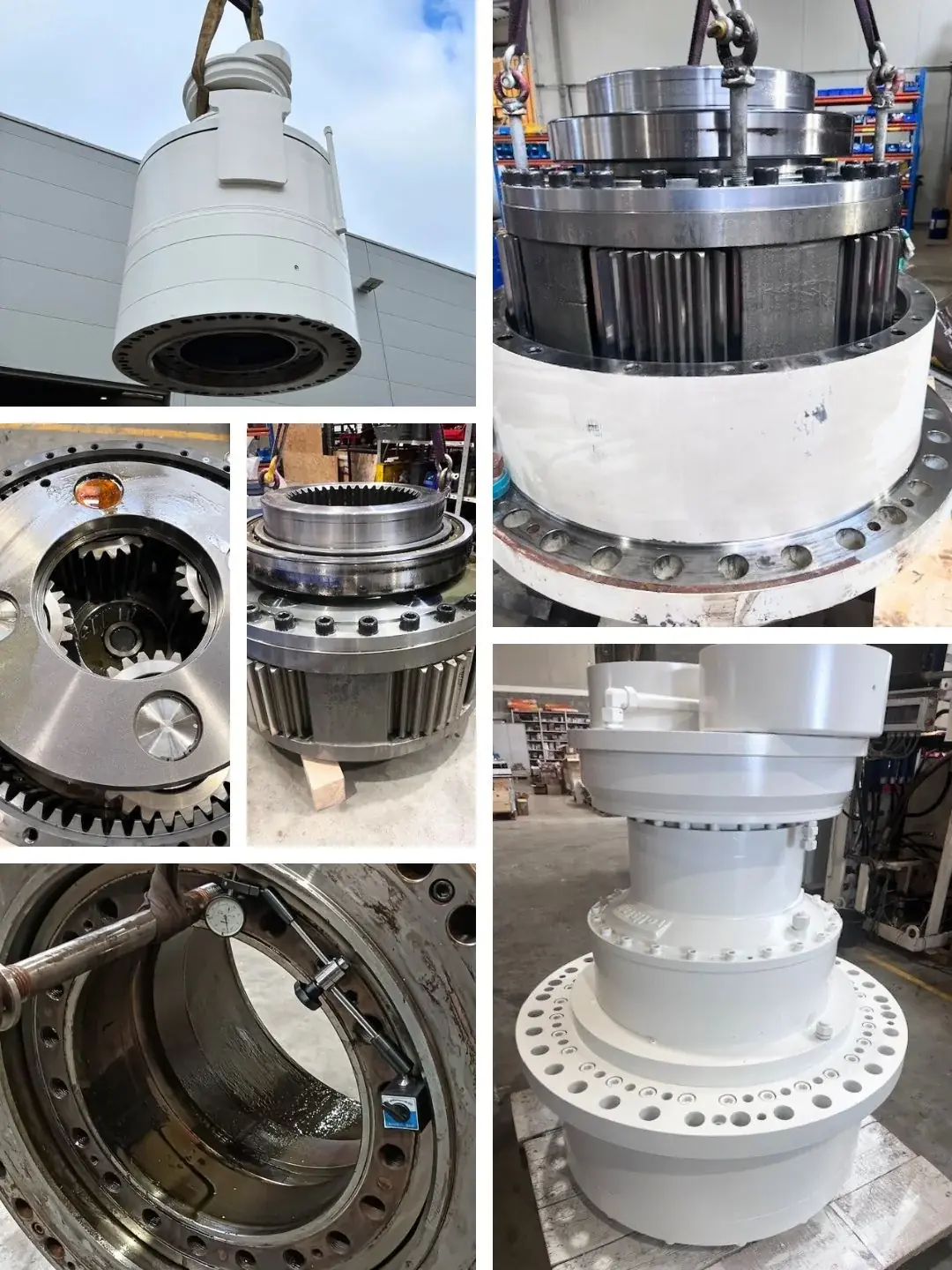
At OSEL Makine, located in Dilovası / KOBİ OSB Kocaeli, we are an engineering firm providing high-precision CNC machining, heavy welding, and special machine solutions. Efficiency and sustainability in industrial manufacturing are among our top priorities. In this context, the integration of Predictive Maintenance (PdM) and Artificial Intelligence (AI) stands as a cornerstone technology shaping the future of modern production facilities.
Traditional maintenance approaches (reactive and periodic) often lead to unplanned downtime, high repair costs, and production losses. Predictive Maintenance offers a proactive solution to these issues, aiming to anticipate equipment failures before they occur. Artificial Intelligence, in turn, elevates this predictive capability through its data analysis and learning capacity.
What is Predictive Maintenance?
Predictive Maintenance is a maintenance strategy focused on continuously monitoring the condition of machinery and equipment to identify potential failures in advance. This approach ensures optimal equipment performance while preventing unnecessary part replacements and unplanned downtime. Essentially, data collected through sensors (vibration, temperature, current, acoustic emission, pressure, etc.) is analyzed to detect anomalies and signs of impending failure.
The Role of Artificial Intelligence in PdM
Artificial Intelligence technologies significantly enhance the effectiveness and accuracy of Predictive Maintenance. With their ability to process large datasets, recognize complex patterns, and predict future states, AI has become an indispensable component of PdM processes.
1. Data Collection and Integration
- Industrial Internet of Things (IIoT): Sensors integrated into machinery provide real-time data streams from production processes.
- SCADA/ERP Systems: Production data, operational information, and maintenance history form a rich source for AI models.
2. Data Analysis and Pattern Recognition
- Machine Learning (ML) Algorithms: Regression, classification, and clustering algorithms are used to identify hidden patterns, deviations, and anomalies in the collected data.
- Deep Learning (DL) Models: Especially in complex and high-dimensional sensor data (e.g., vibration spectra, audio recordings), they can extract deeper and more abstract features, detecting failure symptoms much earlier and more accurately.
3. Fault Prediction and Root Cause Analysis
- Remaining Useful Life (RUL) Prediction: AI models predict with high accuracy when equipment will fail, giving maintenance teams sufficient time for proactive intervention.
- Anomaly Detection: Automatically detects deviations from normal operating behavior, signaling potential problems before symptoms even emerge.
- Root Cause Analysis: AI can analyze multiple data sources and past failure scenarios to determine the underlying causes of failures, helping to prevent recurring issues.
4. Optimized Maintenance Scheduling
- Prescriptive Analytics: AI can suggest not only what will fail but also when and how to intervene. This allows for optimization of spare parts inventory and the most efficient scheduling of maintenance teams.
Benefits of AI-Powered Predictive Maintenance
At OSEL Makine, we are acutely aware of the tangible benefits this integration provides to our customers:
- Reduced Unplanned Downtime: Production interruptions are minimized as failures are predicted in advance.
- Optimized Maintenance Costs: Unnecessary part replacements are reduced; interventions occur only when needed.
- Extended Equipment Lifespan: Regular and accurate maintenance increases the operational life of machinery.
- Improved Workplace Safety: Preventing potentially dangerous failures makes the work environment safer.
- Increased Production Efficiency and Quality: Stably operating machines ensure higher and more consistent production quality.
- Data-Driven Decision Making: Decisions supported by objective data strengthen business strategies.
Comparison of Maintenance Approaches
| Maintenance Type | Approach | AI Contribution | Advantage | Disadvantage |
|---|---|---|---|---|
| Reactive Maintenance | Intervention after failure occurs | None | Low initial investment | High downtime, unplanned repairs, production loss |
| Preventive Maintenance | Scheduled maintenance at fixed intervals | None (but can provide data collection infrastructure) | Partially reduces unplanned failures | Unnecessary part replacement, potential early failure |
| Predictive Maintenance | Failure prediction through data analysis | Data collection, analysis, prediction, optimization | Minimum downtime, optimized cost, extended life | High initial investment, data expertise |
OSEL Makine and the Future of Manufacturing
At OSEL Makine, we not only provide high-quality CNC machining, heavy welding, and special machine solutions but also ensure that these machines are ready for Industry 4.0 and AI integration. Predictive Maintenance and Artificial Intelligence enable manufacturing facilities to be not just more efficient, but also smarter, more flexible, and sustainable. With our engineering expertise and commitment to technology, we help our customers take a leading position in this transformation.
Contact us to learn more about the smart solutions offered by OSEL Makine for maximum efficiency and minimum downtime in your industrial operations. Let's build the future of manufacturing together.
LET'S BUILD TOGETHER
Send us your drawing.
A technical drawing, a sample photo or a short description is enough. We clarify sequence, scope and lead time with the quote.